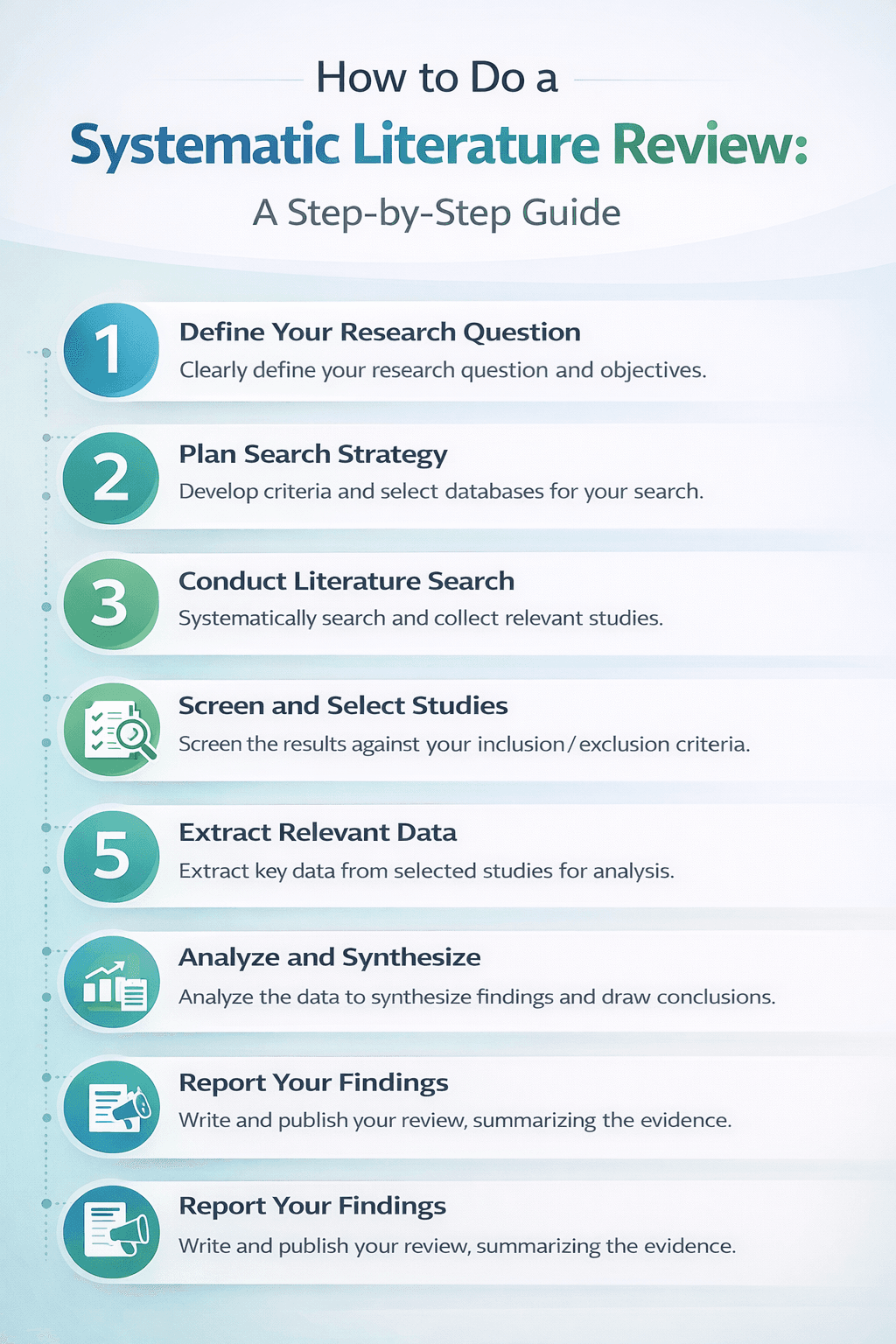
How to Do a Systematic Literature Review: A Step-by-Step Guide
Mar 1, 2026
A systematic literature review is one of the most rigorous and valuable things a researcher can produce. Unlike a standard literature review — which summarises what you've read — a systematic review follows a defined, reproducible methodology to find, evaluate, and synthesise all available evidence on a specific question.
Done well, a systematic review can become one of the most-cited papers in your field. Done poorly, it's an enormous time investment that produces unreliable results. This guide walks you through every step of the process, from formulating your research question to writing up your findings.
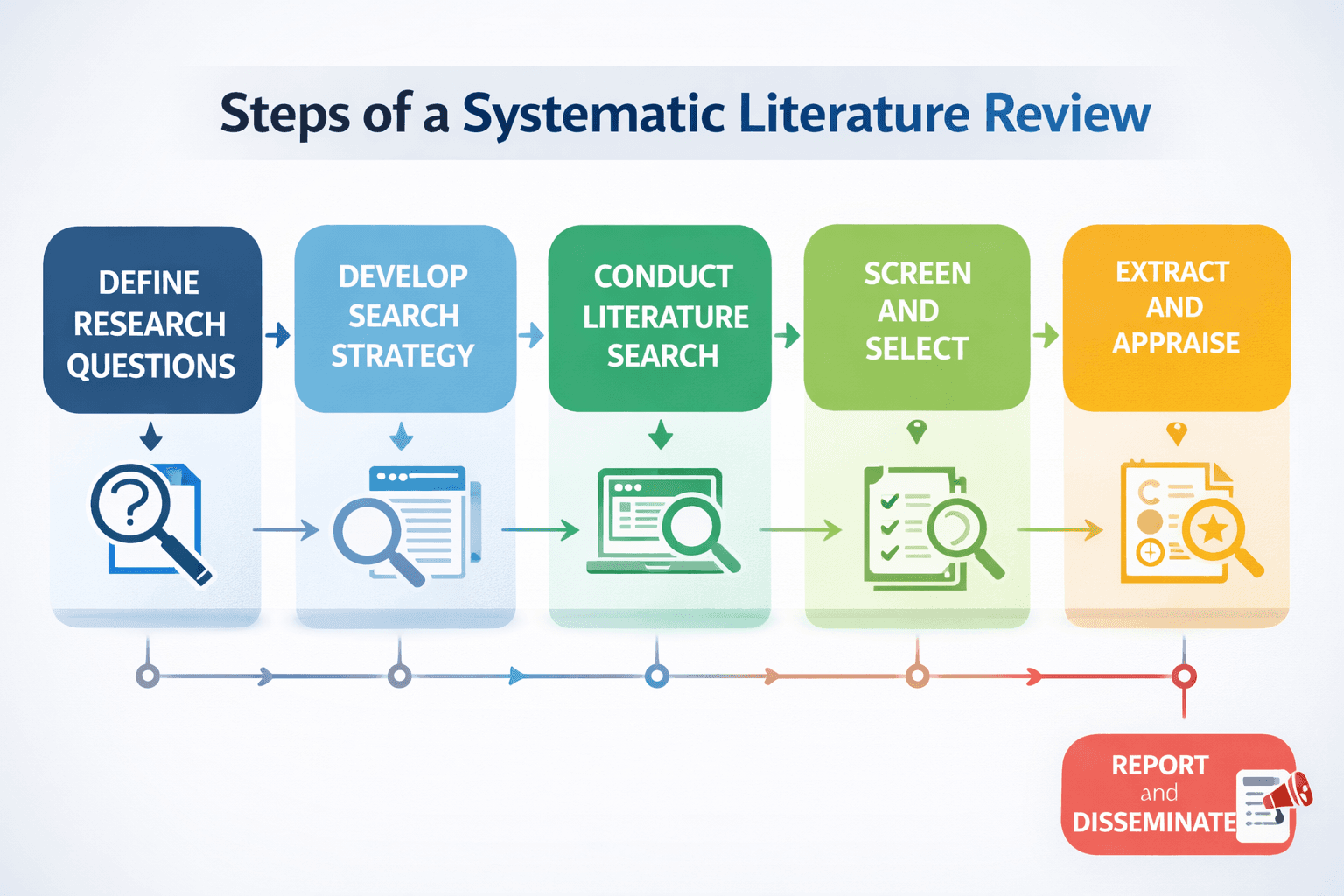
📸 IMAGE: A flowchart showing the 7 steps of a systematic literature review as connected stages.
Step 1: Define Your Research Question Using the PICO Framework
Everything in a systematic review flows from a well-formed research question. A vague question produces a vague review. The most widely used framework for structuring research questions — particularly in health and life sciences — is the PICO framework:
P — Population: Who are you studying? (e.g., adult patients with Type 2 diabetes)
I — Intervention: What intervention or exposure? (e.g., low-carbohydrate diet)
C — Comparison: Compared to what? (e.g., standard dietary guidelines)
O — Outcome: What outcome are you measuring? (e.g., HbA1c reduction over 12 months)
A strong PICO question gives you the boundaries of your review before you search a single database. Without it, scope creep turns a 3-month project into a 12-month one.
Step 2: Write and Register Your Review Protocol
Before you search for a single paper, write a protocol that documents your methods: your research question, inclusion and exclusion criteria, the databases you'll search, your search strategy, and how you'll assess study quality.
Registering your protocol on PROSPERO (for health reviews) or OSF before you begin is considered best practice. It prevents accusation of outcome-reporting bias and signals rigour to peer reviewers and journals. This step adds a week upfront but protects months of work downstream.
Step 3: Design Your Search Strategy
A systematic review requires a comprehensive search — not just a Google Scholar query. Your search strategy should cover multiple databases simultaneously, use appropriate search terms and Boolean operators, and be documented clearly enough that another researcher could replicate it exactly.
Key databases to include:
PubMed — essential for biomedical and clinical research
Embase — broader drug and clinical trial coverage
Cochrane Library — gold standard for clinical trials and reviews
PsycINFO — for psychology and behavioural sciences
arXiv and DOAJ — for emerging fields and open access content
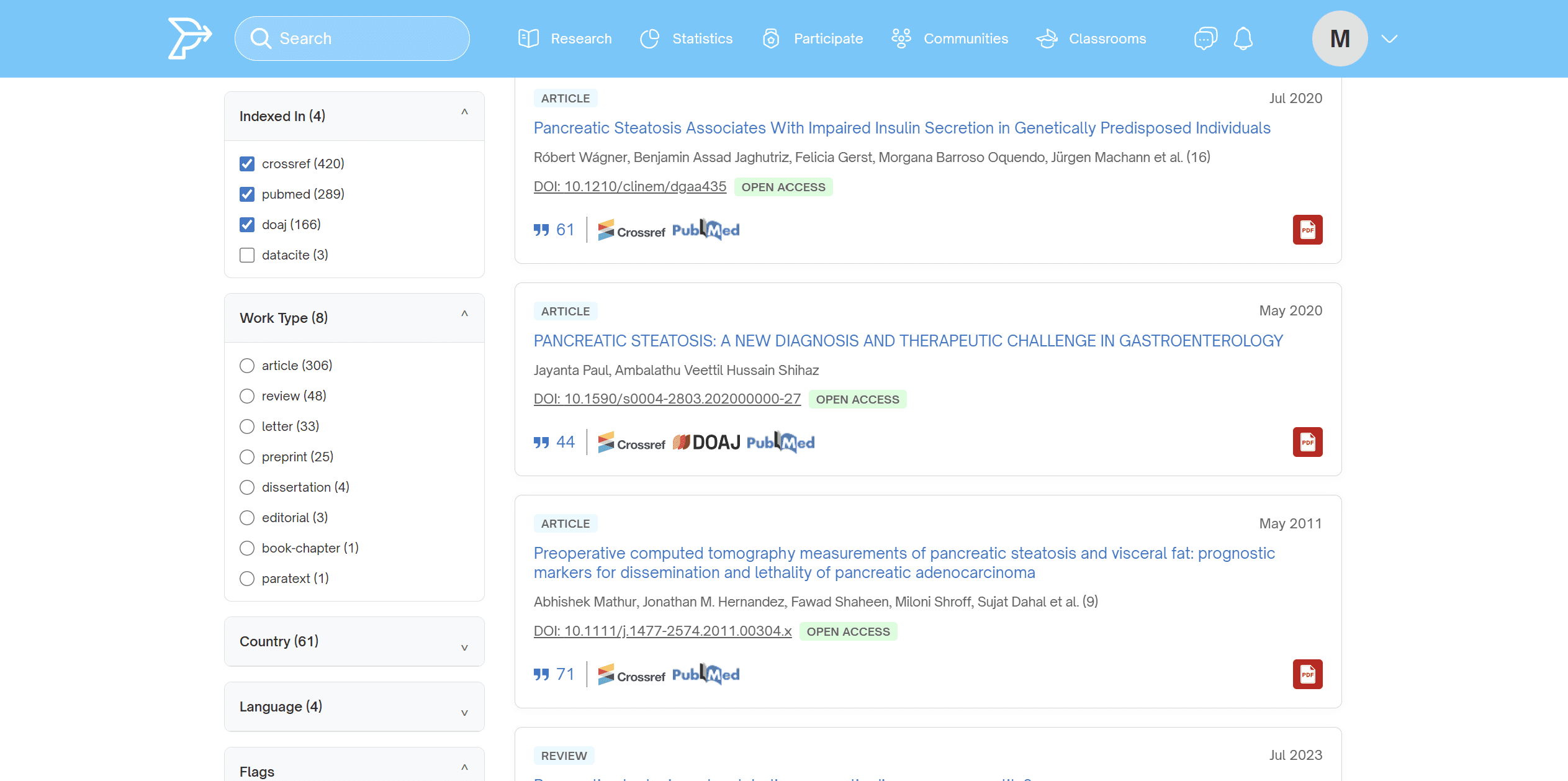
📸 IMAGE: PACR lets you search PubMed, arXiv, DOAJ, and Crossref from one interface — saving significant time in the database search phase.
Use MeSH terms in PubMed searches where possible — these controlled vocabulary terms catch papers even when authors use different terminology. Platforms like PACR can help you discover relevant MeSH terms and synonyms you might otherwise miss, searching across all major databases from a single interface without switching tabs.
Step 4: Screen Titles and Abstracts
Once your searches are complete, you'll likely have hundreds or thousands of results. The screening phase removes papers that don't meet your inclusion criteria. This typically happens in two stages:
Stage 1 — Title and abstract screening: Apply your inclusion and exclusion criteria to the title and abstract alone. This removes the obvious mismatches quickly.
Stage 2 — Full-text screening: For papers that pass Stage 1, retrieve and read the full text to make a final inclusion decision.
Systematic review best practice requires two independent reviewers to screen each paper, with disagreements resolved by discussion or a third reviewer. Tools like Rayyan or Covidence help manage this process and track decisions transparently.
Step 5: Assess Study Quality
Not all evidence is equal. A randomised controlled trial provides stronger causal evidence than an observational study. A well-powered study with rigorous controls outweighs a small, poorly controlled one. Your review needs to assess and report the quality of each included study.
Standard tools for quality assessment include:
Cochrane Risk of Bias tool — for randomised trials
ROBINS-I — for non-randomised interventional studies
Newcastle-Ottawa Scale — for observational studies
GRADE framework — for rating the overall body of evidence
This step is time-consuming but essential. A review that doesn't account for study quality produces misleading conclusions.
Step 6: Extract and Synthesise Data
Data extraction means pulling the key information from each included study into a standardised form: study design, population characteristics, intervention details, outcomes measured, and results. Use a pre-designed extraction template so every study is assessed consistently.
Synthesis depends on whether your data is suitable for meta-analysis:
If yes: Combine quantitative results statistically to produce a pooled effect size, presented in a forest plot.
If no: Conduct a narrative synthesis — a structured qualitative summary of the findings, grouped thematically.
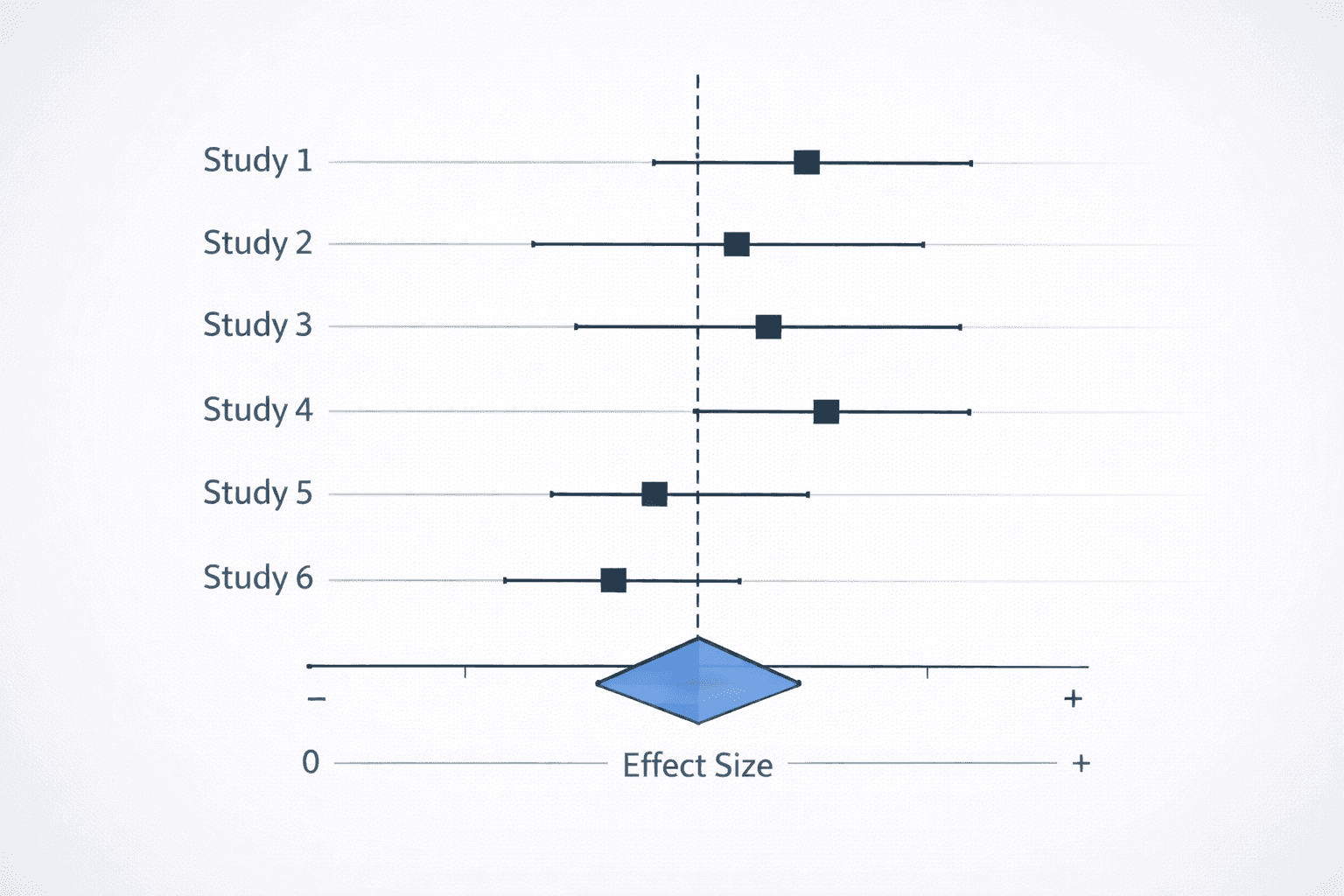
📸 IMAGE: A simple illustration of what a forest plot looks like
Step 7: Write Up and Report Using PRISMA Guidelines
Your final review should follow the PRISMA reporting guidelines — Preferred Reporting Items for Systematic Reviews and Meta-Analyses. PRISMA provides a checklist and flow diagram template that most journals now require for systematic review submissions.
Your write-up structure should include: introduction and rationale, methods (search strategy, inclusion criteria, quality assessment), results (PRISMA flow diagram, study characteristics, synthesis), discussion (interpretation, limitations, implications), and conclusion.
How Long Does a Systematic Literature Review Take?
For a single researcher working without automation tools: 6–18 months. With a team of two to three reviewers and tools that help manage screening and data extraction: 3–6 months. AI-assisted platforms like PACR can significantly reduce the initial database search and synthesis phases, letting you identify the most relevant literature faster before the formal screening process begins.
Common Mistakes to Avoid
Starting without a registered protocol
Searching only one or two databases
Having a single reviewer screen all papers
Failing to document your search strategy reproducibly
Conflating narrative reviews with systematic ones in your methods section
FAQ
How is a systematic review different from a literature review? A standard literature review is a selective summary of relevant work. A systematic review follows a defined, transparent, reproducible methodology to find and synthesise all available evidence on a specific question — minimising bias in the process.
Do I need two reviewers to do a systematic review? Best practice requires two independent reviewers for screening and data extraction, though some fields accept single-reviewer designs with clearly documented limitations.
Can AI help with a systematic review? AI tools can assist significantly with the search and initial synthesis phases. PACR's AI research assistant can help identify relevant papers across databases and surface key findings quickly — though the formal inclusion, quality assessment, and synthesis steps still require human judgement.
What is PRISMA? PRISMA stands for Preferred Reporting Items for Systematic Reviews and Meta-Analyses. It's a reporting guideline that most peer-reviewed journals now require for systematic review submissions. You can download the full checklist at prisma-statement.org.
What databases should I search for a systematic review? At minimum, search PubMed, Cochrane Library, and at least one other field-specific database. Using PACR lets you cover PubMed, arXiv, Crossref, and DOAJ simultaneously from one search — a strong starting point before moving into specialist databases.
Also see our full comparison of PACR vs ResearchGate to find the right platform for your research workflow.